What Type of Hair Does Laser Work Best On?
What type of hair does laser work best on? Laser hair removal works best on thick, coarse, and dark hair—specifically black or dark brown. This is because the laser’s light is designed to specifically target the dark pigment (melanin) located inside the hair follicle to safely destroy it.
While dark hair on fair skin has historically been the easiest combination to treat, modern technology has completely changed the rules. Today, different hair textures, skin tones, and medical backgrounds require specific laser types to get permanent results. We will break down exactly how your unique hair and skin will respond to treatment. If you have dark, coarse hair and are ready to stop shaving, book a consultation for laser hair removal in North York with our expert team today.
In a Nutshell
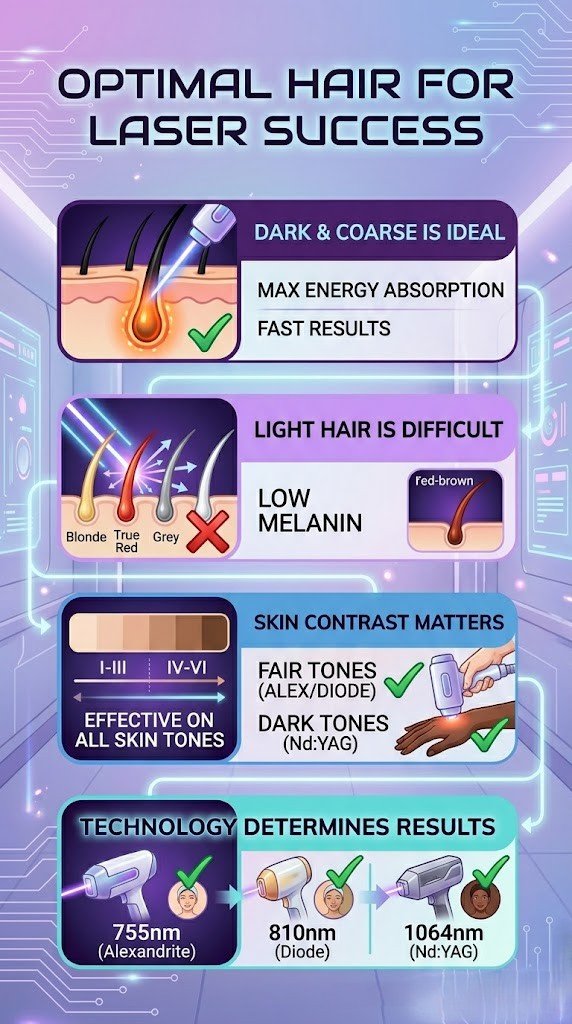
Dark and Coarse is Ideal: Black and dark brown hair absorb the most laser heat, making treatment fast and highly effective.
Light Hair is a Challenge: Blonde, white, grey, and true red hair lack the necessary dark pigment for the laser to detect.
Skin Tone Matters: High contrast between light skin and dark hair is the easiest to treat, but specialized lasers safely treat dark skin.
The Machine is Crucial: Your results depend heavily on the specific laser wavelength your clinic uses (Alexandrite, Diode, or Nd:YAG).
How Does the Laser Actually Target Hair?
To understand why certain hair types respond better than others, you need to understand the science behind the machine. The laser shoots a highly concentrated beam of light into the skin. This light is looking for one thing: melanin (the dark pigment inside your hair).
Think of it like wearing dark clothing on a hot, sunny day. The dark fabric instantly attracts and absorbs the heat from the sun. If you wear a white shirt, the light simply reflects off it, keeping you cool. The laser works exactly the same way. The dark pigment in the hair absorbs the light and converts it into intense heat. This heat travels down the hair shaft directly to the root, where it permanently destroys the cells that connect the hair to your blood supply. You can learn more about this specific process by reading how does diode laser hair removal work.
Which Hair Colors and Textures Get the Best Results?
The color and thickness of your hair determine how much laser energy is absorbed. Here is how different hair types respond to treatment:
Thick, Dark Hair (The Best Candidates)
Thick, coarse hair that is black or dark brown gets the absolute best results. Because it is thick, it holds an abundance of melanin. This allows the hair to rapidly absorb massive amounts of laser energy, destroying the root quickly and effectively.
Thin, Dark Hair
If you have thin or fine dark hair (often found on the face or arms), laser removal will still work, but it takes more effort. Because the hair is thinner, it contains less pigment to absorb the heat. A skilled technician must use higher energy settings, and it will typically require more sessions to see long-lasting results.
Blonde, Grey, and White Hair
Standard lasers simply will not work on blonde, grey, or white hair. These hair colors lack the dark melanin required to absorb the heat. Instead of absorbing the energy and destroying the follicle, the laser light just reflects harmlessly off the light-colored hair.
Red Hair
Red hair is unique because it contains a different type of pigment called pheomelanin. Standard lasers cannot effectively “see” or target pheomelanin, making red hair incredibly difficult to treat. If you want a deeper understanding of why this happens, read our guide explaining why doesn’t laser hair removal work on red hair.
Vellus Hair (Peach Fuzz)
Vellus hair is the soft, light “peach fuzz” found on the cheeks and body. Because it is so thin and light, it does not absorb enough energy to destroy the follicle.
Does Skin Tone Affect How the Laser Works?
Yes, your skin tone is a massive factor. Clinics use the Fitzpatrick scale (Types I through VI) to determine how your skin reacts to light.
Historically, people with very light skin (Types I-III) and very dark hair were the only good candidates. This is because the high contrast made it easy for the laser to target the hair without burning the skin. People with darker skin (Types IV-VI) have higher melanin levels in their skin, making it harder for older lasers to distinguish between the skin and the hair.
However, modern clinics solve this contrast problem by using highly specific laser wavelengths:
- Alexandrite (755nm): This is the most efficient laser for lighter skin tones, as it targets pigment with high precision.
- Diode (810nm): This is the versatile “workhorse” that safely and effectively treats a wide range of skin and hair types.
- Nd:YAG (1064nm): This wavelength is the absolute safest option for dark brown or black skin. It bypasses the surface melanin entirely and pushes deeper into the skin to target only the hair root, eliminating the risk of burns or hyperpigmentation.
What Body Areas See the Fastest Results?
The body areas that naturally grow thick, coarse, and fast-growing hair show the most dramatic and rapid results. This includes the underarms, bikini line, lower legs, and male facial hair. Areas with finer hair, like the upper lip or forearms, will take longer. If you are wondering about the timeline for your specific treatment area, check out our guide on when does laser hair removal start working.
Why Your Clinic’s Machine and Technician Matter
Having the right hair type is only part of the equation. The machine and the person operating it are just as critical.
First, the machine matters. Some spas use multi-purpose machines (like IPL) where hair removal is just one of many settings. A purpose-built, medical-grade laser (like an Nd:YAG or Diode) is engineered specifically to destroy hair follicles safely.
Second, technician skill dictates your results. A bad technician runs the same default settings on everyone. A great technician knows exactly which wavelength fits your skin type and when to safely turn up the energy (fluence) as your hair thins out between sessions.
Frequently Asked Questions
What hair type is best for laser?
Thick, coarse, and dark hair (black or dark brown) is the absolute best type for laser hair removal. This type of hair holds an abundance of dark pigment, allowing it to rapidly absorb the heat from the laser and destroy the root quickly.
What type of hair responds best to laser hair removal?
Hair that creates a high contrast against the surrounding skin responds best. For example, thick dark hair on pale skin provides a perfect, high-contrast “bullseye” for the laser machine to target without heating the surrounding skin.
What hair cannot be lasered?
White, grey, light blonde, and true red hair cannot be lasered effectively because they lack the required dark melanin to absorb the laser’s heat. Additionally, fine “peach fuzz” (vellus hair) is too thin to absorb enough energy for removal.
What is the best hair removal for PCOS facial hair?
Laser hair removal is highly effective for managing the thick, coarse facial and body hair caused by Polycystic Ovary Syndrome (PCOS). However, because PCOS is an internal hormonal condition that constantly triggers new hair growth, the laser only treats the symptom. You will likely need ongoing maintenance sessions to keep the hair growth fully managed.
Final Words
Laser hair removal is a highly effective, life-changing treatment, but it relies strictly on the laws of physics. Thick, dark hair will always yield the fastest results because it absorbs the most heat. Furthermore, choosing a clinic with advanced technology—like Diode or Nd:YAG lasers—ensures that the process is safe and effective for every skin tone on the Fitzpatrick scale.
Stop guessing if you are a good candidate and get a professional assessment. Contact our licensed experts today to find out exactly how your hair will respond to treatment.
Moonlight Beauty 📍 Address: 5 Fairview Mall Dr, Unit 490, North York, ON M2J 2Z1 📞 Phone: (647) 548-7949