What Happens If You Tan Before Laser Hair Removal?
Tanning before laser hair removal can increase the risk of skin burns, blisters, irritation, and changes in pigmentation. A recent tan increases melanin in your skin, which can cause the laser to deliver more heat to the surrounding skin instead of concentrating its effect on the hair follicles. This may also reduce treatment effectiveness or cause your appointment to be postponed. Whether you can proceed depends on how recently you tanned, your skin’s condition, and the laser technology being used. If you’ve already tanned, tell your laser technician before treatment rather than risk damaging your skin.

Why Is Tanning Before Laser Hair Removal Risky?
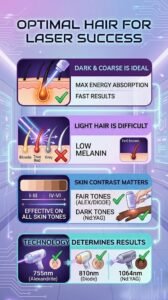
Laser hair removal uses concentrated light energy to target melanin, the pigment responsible for hair color. The pigment in the hair absorbs the laser energy and converts it into heat, damaging the hair follicle to reduce future hair growth.
When you tan through sunlight or tanning beds, ultraviolet (UV) radiation stimulates increased melanin production in your skin. This additional pigment can absorb some of the laser energy that would otherwise be concentrated in the hair.
As a result, more heat may build up in the surrounding skin, increasing the likelihood of adverse reactions. The risk depends on several factors, including the degree of tanning, skin type, laser wavelength, and treatment settings.
What Happens If You Get Laser Hair Removal on Tanned Skin?
Laser hair removal on recently tanned skin can cause several complications. These reactions are not inevitable, but tanning may increase their likelihood, particularly when the skin is still recovering from UV exposure.
Skin Burns and Blistering
Burns are among the more concerning complications of treating recently tanned skin. When additional melanin in the epidermis absorbs laser energy, excessive heat can damage the surrounding tissue.
This may cause painful redness, swelling, blistering, or, in more serious cases, skin damage requiring medical attention. Treating sunburned skin is particularly concerning because the skin is already inflamed and injured.
Hyperpigmentation and Hypopigmentation
Tanning before laser hair removal can also increase the risk of uneven skin pigmentation.
Hyperpigmentation occurs when treated areas become darker than the surrounding skin, often following inflammation. Hypopigmentation occurs when areas become lighter because normal pigmentation has been disrupted.
These changes may resolve over time, but some can persist for months or become long-lasting. The risk varies according to skin characteristics, treatment settings, and the severity of any skin injury.
Reduced Hair Removal Effectiveness
A recent tan can also affect how effectively the laser targets unwanted hair. When the surrounding skin contains more melanin, a provider may need to modify treatment settings to reduce the risk of skin damage.
Depending on the device and circumstances, lower energy settings may produce less effective follicle damage. This can affect the results of a session and potentially increase the number of treatments needed.
However, lowering the settings does not automatically make treatment safe. If the skin is too recently tanned or irritated, postponing the appointment may be the more appropriate decision.
Can You Still Get Laser Hair Removal With a Tan?
Laser hair removal may be possible on some tanned skin, but having a recent tan does not automatically mean treatment can proceed safely. A qualified provider must assess your current skin color, recent UV exposure, and the equipment available before deciding whether to treat or postpone.
There is also an important difference between naturally darker skin and recently tanned skin.
Naturally darker skin contains more baseline pigmentation, but that does not make someone ineligible for laser hair removal. Devices such as the long-pulsed Nd:YAG laser can be appropriate for darker skin types when operated by an experienced professional using suitable settings.
A recent UV tan introduces a different concern because the skin’s pigmentation has changed from its usual baseline, sometimes alongside UV-related inflammation. Even a device suitable for naturally darker skin does not eliminate the additional risks associated with recent tanning.
The safest approach is to disclose any recent sun exposure or tanning before your session, even if the change in your skin color seems minor.
Does Spray Tan or Self-Tanner Affect Laser Hair Removal?
Yes. Spray tans, tanning lotions, and other self-tanning products can affect preparation for laser hair removal, even though they do not darken the skin in the same way as UV tanning.
Most self-tanning products contain dihydroxyacetone (DHA), which reacts with components of the outermost skin layer to produce temporary coloration. Unlike sun tanning, this process does not rely on increased melanin production.
However, artificial tanning products can leave pigment and residue on the treatment area, which may interfere with treatment or make it harder to assess the skin accurately. Clinics commonly require self-tanner to be completely removed or faded before a laser session.
If you’ve used a spray tan or self-tanning lotion, tell your provider before your appointment. Avoid aggressively scrubbing your skin immediately before treatment to remove remaining color, as this can cause additional irritation.
How Long Should You Avoid Tanning Before Laser Hair Removal?
It’s generally recommended to avoid intentional UV tanning for several weeks before laser hair removal. However, there is no single waiting period that guarantees safe treatment for everyone.
Some providers recommend avoiding tanning for at least two weeks, while others require four weeks or longer, particularly after significant sun exposure. These timelines reflect varying clinical protocols rather than a universal safety threshold.
The appropriate waiting period depends on:
How recently you tanned: Fresh tanning can make treatment assessment more difficult.
How much your skin color changed: A pronounced tan may take longer to fade.
Whether you developed sunburn: Redness, tenderness, or peeling can indicate that the skin has not recovered.
Your skin type and laser technology: Different devices and treatment approaches have different considerations.
A more useful indicator than the calendar alone is whether your skin has returned to its usual, untanned condition and is free from irritation. Even then, your laser provider should confirm that treatment is appropriate.
Avoid tanning beds as well as deliberate sunbathing. When spending time outdoors, use protective clothing, seek shade, and apply broad-spectrum sunscreen with SPF 30 or higher.
What Should You Do If You Accidentally Tan Before Laser Hair Removal?
If you’ve already tanned and have an upcoming laser hair removal appointment, contact your clinic before the session. A recent tan does not mean you will develop complications, but proceeding without an assessment could expose your skin to avoidable risks.
Here is what to do:
Tell your provider about the tanning. Explain whether the exposure came from sunlight, a tanning bed, or a self-tanning product.
Share when it happened. The date of your last significant UV exposure and any visible changes in skin color can help your provider assess the situation.
Check for signs of irritation. Redness, tenderness, peeling, and sunburn should be reported before treatment.
Avoid further tanning. Protect the treatment area from additional UV exposure while waiting for professional guidance.
Reschedule if recommended. Allowing your tan to fade and your skin to recover may help reduce the risk of complications.
Do not try to conceal a recent tan or assume your skin is ready simply because it no longer looks red. Your technician may need to reassess the treatment area, adjust the treatment plan, or delay the session.
Is It Better to Wait Until Your Tan Fades?
Waiting until your skin returns to its usual untanned color is generally the safer approach before laser hair removal, especially following significant UV exposure.
A delayed appointment can be inconvenient, but treating skin that is recently tanned or sunburned may increase the risk of burns, pigment changes, and less effective results. Your provider should determine when it is appropriate to resume treatment based on your skin’s condition and the equipment being used.
For the rest of your laser hair removal course, avoiding intentional tanning and following your clinic’s sun-protection instructions can help maintain safer, more consistent treatment conditions.
Sources / References
1. Mayo Clinic — Laser hair removal
https://www.mayoclinic.org/tests-procedures/laser-hair-removal/about/pac-20384720
2. American Academy of Dermatology — Laser hair removal FAQs
https://www.aad.org/public/cosmetic/hair-removal/laser-hair-removal-faqs