
What To Do If Laser Hair Removal Doesn't Work
If your laser hair removal isn’t working, the first steps are to have your technician increase the laser settings, check for hormonal imbalances like PCOS, and ensure you are strictly shaving (not plucking) between sessions.
It is incredibly frustrating to invest time and money into a treatment only to see hair popping back up, but it rarely means the treatment “failed” completely; usually, it just needs a specific adjustment to get back on track.
At Moonlight Beauty, we help clients troubleshoot these issues every day to ensure they get the best results from our laser hair removal services in North York.
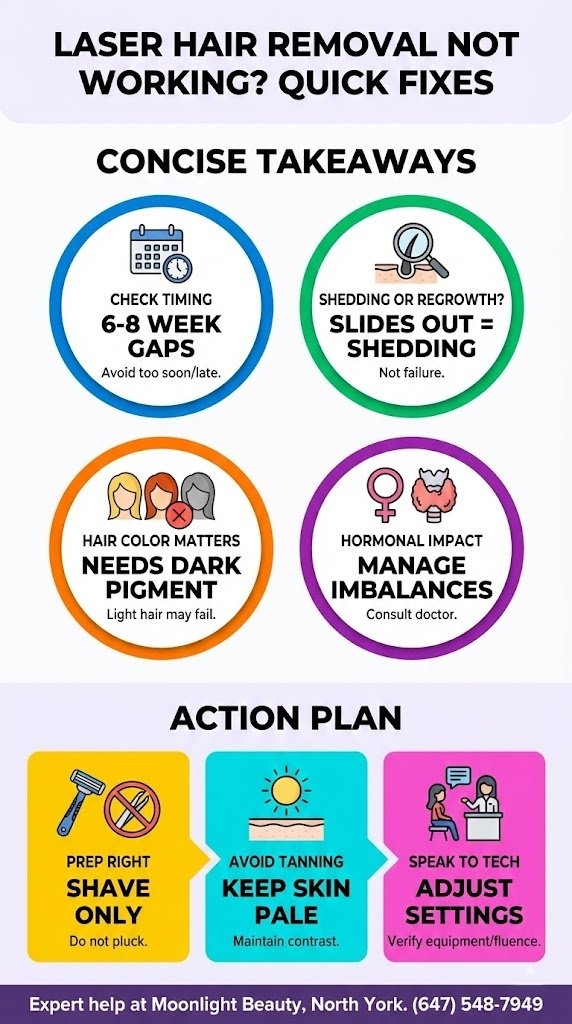
Key Takeaways
Check the Color: Lasers need dark pigment to work; they often struggle with red, blond, or grey hair.
Check the Settings: If you don’t feel a snap or mild heat, the settings might be too low for your hair type
Check Your Health: Hormonal shifts can stimulate new hair growth even after an effective treatment.
Check Your Schedule: Skipping sessions or waiting too long disrupts the hair growth cycle and slows down your results.
Is the Treatment Actually Failing or Just Slow?
Before we panic, we need to figure out if the treatment is actually failing or if it just takes a bit more time than you expected.
Are Your Appointments Timed Correctly?
Timing is everything. Your hair grows in phases, and the laser only works during the “active” growth phase.
- Too Soon: If you come in too early (e.g., every 3 weeks), the hair hasn’t entered the active phase yet, and the laser is firing at nothing.
- Too Late: If you wait too long (e.g., 3-4 months between sessions), you miss the window to catch the new growth. Most body areas need a gap of 6 to 8 weeks. If your appointments are erratic, your results will be too.
How Long Does It Take to See Real Changes?
Many people expect to be hair-free after one or two visits, but that is rarely the case. Hair grows in cycles, and the laser can only kill the hair that is actively growing. This means you need multiple sessions to catch every hair in the right phase. It is normal to still see hair for the first few months. If you are unsure about the timeline, you should read our guide on when does laser hair removal start working to manage your expectations.
Are You Seeing Shedding or Regrowth?
Sometimes, what looks like failure is actually success. After a session, the hair follicle dies, and the skin pushes the old hair out. This can look exactly like stubble or new growth. However, if you pull gently on these hairs, they should slide right out without pain. This is called shedding. To avoid confusion, check out our tips on how to tell if laser hair removal is working so you know the difference between shedding and true regrowth.
Why Is My Hair Still There? (The Common Culprits)
If you have had 6 or more sessions and the hair is still thick, one of these common issues is likely the cause.
Are You the Right Candidate for This Laser?
The laser works by finding the contrast between the skin and the hair. In the past, this meant you needed light skin and dark hair. Today, technology is much better, but the principle is the same. The laser needs to find the melanin (color) in the hair. If the contrast isn’t strong enough and the technician uses the wrong machine, the laser might miss the hair entirely. We explain this in detail in our post about who does laser hair removal work best for.
Do You Have Light or Red Hair?
This is the most common reason for failure that we see. Laser beams target pigment. If your hair is blonde, red, grey, or white, it simply does not have enough dark pigment for the laser to absorb. The energy passes right through the hair without damaging the root. If this is your situation, standard laser treatment might not be the right choice. You can learn more about the science behind why laser hair removal doesn’t work on blondes to understand why this limitation exists.
Could Hormones Be Blocking Your Results?
Sometimes, the laser works perfectly, but your body keeps making new hair. Hormones, specifically testosterone, drive hair growth. Conditions like Polycystic Ovary Syndrome (PCOS) or thyroid issues can cause the body to produce new hair follicles constantly. In this case, the laser is killing the old hair, but your body is replacing it just as fast. You may need to see a doctor to manage the hormonal balance alongside your laser treatments for the best outcome.
Are External Factors Affecting Your Results?
Sometimes the issue isn’t your body or the laser, but what you are doing before and after your appointment
Are You Prepping the Right Way?
For the laser to work, the root of the hair must be present in the follicle. If you wax, pluck, or thread your hair between sessions, you are ripping the root out. When the laser fires, there is nothing there to target. You must strictly stick to shaving only. Shaving leaves the root intact so the laser has a clear path to destroy it.
Is Your Skin Too Tanned?
This is a huge factor that many people overlook. Lasers love contrast. If you have been tanning (either in the sun or using fake tan) between sessions, the contrast between your skin and your hair decreases. This forces the technician to lower the laser settings to avoid burning your skin. Lower settings mean less energy reaching the hair root, which leads to poor results. You must keep your skin as natural/pale as possible during your treatment course.
Is Your Lifestyle Impacting the Follicles?
Your skin needs to stay cool and calm immediately after a session. If you go straight to a hot sauna or a heavy gym session, the excess heat and sweat can irritate the follicles and potentially impact the results. It is important to follow aftercare rules closely. If you are an active person, make sure you know can you work out after laser hair removal to keep your skin safe.
Action Plan: Steps to Fix the Problem
If you have checked all the boxes above and still have hair, here is exactly what you need to do next.
Was the Session Rushed?
A proper laser session takes time. The laser needs to deliver a specific amount of energy to every square inch of the treatment area. If your technician was rushing—gliding over your legs in 5 minutes instead of 20—the energy might not have been concentrated enough to kill the follicle. This is often called “under-treating.” If you felt the session was suspiciously fast, mention this to the clinic manager or your technician.
When Should You Talk to Your Technician?
Don’t just keep going to appointments silently. Speak up! If you don’t feel any sensation during the pulse, the settings might be too low. Ask your technician if they can safely increase the power (fluence). Also, verify they are using the right type of laser for your skin tone. For example, an Nd:YAG laser is often better for darker skin, while a Diode or Alexandrite is great for lighter skin. A good clinic will be happy to adjust the plan.
When Should You Switch Methods?
If you have white, grey, or very light red hair, laser hair removal might simply not work for you, no matter how high the settings are. In this specific case, electrolysis is often the better alternative. It uses a tiny probe to zap individual hairs and doesn’t rely on pigment, making it the only truly permanent option for hair with no color.
Final Words
If laser hair removal isn’t working for you, don’t give up. It is rarely a lost cause. Usually, it comes down to adjusting the settings, being consistent with your schedule, or checking on your hormonal health. By understanding how the process works, you can take control and get the smooth results you deserve.
Ready for a treatment that actually delivers? Visit us at Moonlight Beauty in North York for a consultation with expert technicians who know how to get it right the first time.
Moonlight Beauty
5 Fairview Mall Dr Unit 490, North York, ON M2J 2Z1, Canada (647) 548-7949